

How to Choose the Best Knee Replacement Hospital in Bangalore?
To choose a knee replacement hospital in Bangalore, check seven things: the surgeon’s experience with knee replacement, whether the hospital does joint replacement regularly, a clear diagnosis, the type of replacement proposed, surgical and anaesthesia support, recovery and follow-up care, and how easy the hospital is to reach. A hospital’s size or online rating matters less than these.
This guide is for people advised to undergo knee replacement and their families in Kudlu, Singasandra, HSR Layout, Bommanahalli, Electronic City and nearby areas of south Bengaluru.
Why it matters: Research published in The Lancet found that around 82% of total knee replacements lasted 25 years. Choosing the right surgeon and care team is important. For example, a hospital that regularly performs joint replacements and offers physiotherapy may be a better choice than one focused mainly on fractures and general orthopaedic care.
Why Does Choosing the Right Knee Replacement Hospital Matter?
Knee replacement is a major decision, especially when knee pain has started affecting walking, sleep, work, exercise, or everyday activities.
For many patients, the search begins with phrases such as “knee replacement hospital in Bangalore” or “best hospital for knee replacement in Bangalore.” But how do you decide which hospital is actually suitable for your needs?
The answer is not simply the hospital’s size, online rating or location.
A good choice should be based on the orthopaedic expertise, suitability of the recommended treatment, surgical facilities, safety processes, recovery support, and the quality of communication between the patient and care team.
What Should You Check Before Choosing a Knee Replacement Hospital in Bangalore?
Look at the Orthopaedic Surgeon’s Experience
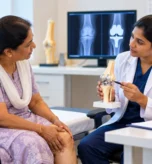
The surgeon is an important factor when considering knee replacement. Look for a knee replacement surgeon in Bangalore with relevant experience in joint replacement and knee conditions. Check their qualifications, expertise and experience with procedures such as total knee replacement.During your consultation, ask about the recommended procedure, non-surgical alternatives, expected recovery, and possible risks and complications. This can help you understand why surgery is being recommended and what to expect.Example: Search the surgeon’s name on the National Medical Commission’s Indian Medical Register (nmc.org.in). Then ask: “How many knee replacements do you do in a year, and how many patients like me have you treated?”
During the consultation, also ask about the recommended procedure, non-surgical alternatives, expected recovery and possible risks.
Check Whether the Hospital Provides Joint Replacement Care
A hospital may offer general orthopaedic care without specializing in joint replacement. When comparing a top orthopaedic hospital in Bangalore, check whether it provides services such as total knee replacement, hip replacement, arthroscopy, arthritis and joint pain treatment, sports injury care and ligament procedures.JIGS Hospital lists Orthopaedics as a specialty, including knee, hip and shoulder joint replacement and arthroscopy procedures
Understand the Diagnosis Before Agreeing to Surgery
Not everyone with knee pain needs knee replacement. An orthopaedic specialist should evaluate your symptoms, medical history, physical examination and imaging before recommending treatment.If surgery is suggested, ask why it is needed, what damage is present, which type of procedure is planned, whether alternatives are available and what recovery may involve. Understanding these factors can help you make an informed decision.
Ask About the Type of Knee Replacement
“Knee replacement” can refer to different procedures. Depending on the condition, a specialist may recommend total or partial knee replacement. The choice depends on the location and extent of joint damage, symptoms, overall health and clinical assessment. Rather than choosing based on which procedure sounds newer, ask your surgeon why a particular option is suitable for your knee.
Evaluate Surgical and Anaesthesia Support
Knee replacement involves care before, during and after surgery. A hospital should have suitable surgical infrastructure and a team to support the patient throughout the process.JIGS Hospital states that its surgical infrastructure includes modular operation theatres, a surgical ICU, inpatient facilities, an in-house pharmacy and anaesthesia services. Patients can also ask about pre-operative assessment, pain management, post-surgery monitoring, follow-up and rehabilitation support.
Consider Recovery and Follow-Up Care
Knee replacement recovery continues after surgery. It may involve following medical advice, gradually increasing activity and working on mobility and strength with the healthcare team.Before choosing a knee replacement hospital in Bangalore, ask about post-operative reviews, pain management, wound care, physiotherapy, mobility guidance and follow-up consultations. Knowing whom to contact during recovery can also provide clarity and support.
Location and Accessibility Matter Too
A hospital may have strong medical services, but practical accessibility is also important.Think about how easily you can travel to the hospital for:
- Initial consultation
- Pre-operative assessments
- Surgery
- Follow-up appointments
- Rehabilitation-related visits
For patients living around Kudlu, Singasandra, HSR Layout, Bommanahalli, Electronic City, and nearby parts of South Bengaluru, location can be a practical consideration when comparing hospitals.
What Questions Should You Ask a Knee Replacement Specialist?
Before finalising your treatment, prepare a short list of questions.
| Question | Why it matters |
| Do I definitely need knee replacement? | Helps understand whether surgery is appropriate |
| What type of knee replacement is suitable? | Explains the proposed procedure |
| What are my non-surgical options? | Helps compare alternatives |
| What tests or scans are required? | Clarifies the diagnosis |
| What are the potential risks? | Helps you understand possible complications |
| How long could recovery take? | Helps with practical planning |
| What follow-up care will I need? | Sets expectations after surgery |
If you remain uncertain, seeking a second opinion from another qualified orthopaedic specialist can be a reasonable option. JIGS also provides information specifically about knee replacement second opinions, including reviewing X-rays, MRI scans, medical history and symptoms before confirming whether surgery is appropriate.
Why Do Patients Consider JIGS Hospital for Knee Replacement in Bangalore?
For patients seeking a knee replacement hospital in Bangalore, JIGS Hospital in Kudlu offers orthopaedic and joint care, including knee and hip replacement, total knee replacement, arthroscopy, and arthritis treatment.
Its orthopaedic team includes consultants with expertise in joint replacement and knee surgery, helping patients understand suitable treatment options. Patients can book an orthopaedic consultation to discuss their condition and whether knee replacement is appropriate.
Key takeaways
- The surgeon’s experience with knee replacement matters most.
- Check that the hospital does joint replacement regularly, not just general orthopaedics.
- Make sure you understand your diagnosis and why a particular type of replacement is advised.
- Ask about the operation theatre, ICU, anaesthesia, physiotherapy and follow-up care.
- Pick a hospital you can reach easily for repeat visits, and get a second opinion if you are unsure.
Need expert guidance? Book a knee replacement consultation at JIGS Hospital, Kudlu, Bangalore today.
Frequently Asked Questions (FAQs)
- How do I choose the best knee replacement hospital in Bangalore?
Compare the orthopaedic surgeon’s experience, joint replacement expertise, hospital infrastructure, diagnostic services, anaesthesia support, recovery planning, follow-up care and accessibility. - How do I find a knee replacement surgeon in Bangalore?
Start by looking for an orthopaedic surgeon with specific experience in knee and joint replacement. During the consultation, ask about your diagnosis, treatment options, proposed procedure and expected recovery. - When is knee replacement surgery recommended?
Knee replacement may be considered when significant knee joint problems cause persistent pain and functional limitations and other appropriate treatments have not provided sufficient relief. The decision should be made after an individual assessment by an orthopaedic specialist. - Should I get a second opinion before knee replacement?
A second opinion can be useful if you are uncertain about the diagnosis, the need for surgery or the recommended procedure. Bring relevant X-rays, scans, medical records and previous prescriptions to the consultation. - What should I ask a knee replacement specialist?
Ask why surgery is recommended, what type of replacement is appropriate, what alternatives exist, what risks may apply to you, and what the recovery and follow-up process will involve.